
How to Become a System Administrator
Learn how to become a system administrator step by step, from skills and certs to landing your first sysadmin job.

If you want to know how to become a system administrator, the short answer is this: learn core IT skills, get hands-on experience in an entry-level role like help desk, then move up into a sysadmin title. Most sysadmins did not start with a four-year degree. A lot of them started answering phones on a help desk, fixing printers, and resetting passwords, then built up to servers, networks, and cloud systems over a few years.
Getting there takes a mix of technical skill, the right entry point, and proof that you can keep systems running. You need to know operating systems, networking basics, and at least one scripting language before anyone hands you admin access to production servers. You also need a job history that shows you can be trusted with that access, which is why help desk and desktop support jobs matter so much as a starting point. The rest comes down to picking the right credentials and knowing how to find and apply for openings that actually fit where you are right now.
Table of Contents
What a System Administrator Actually Does Day to Day
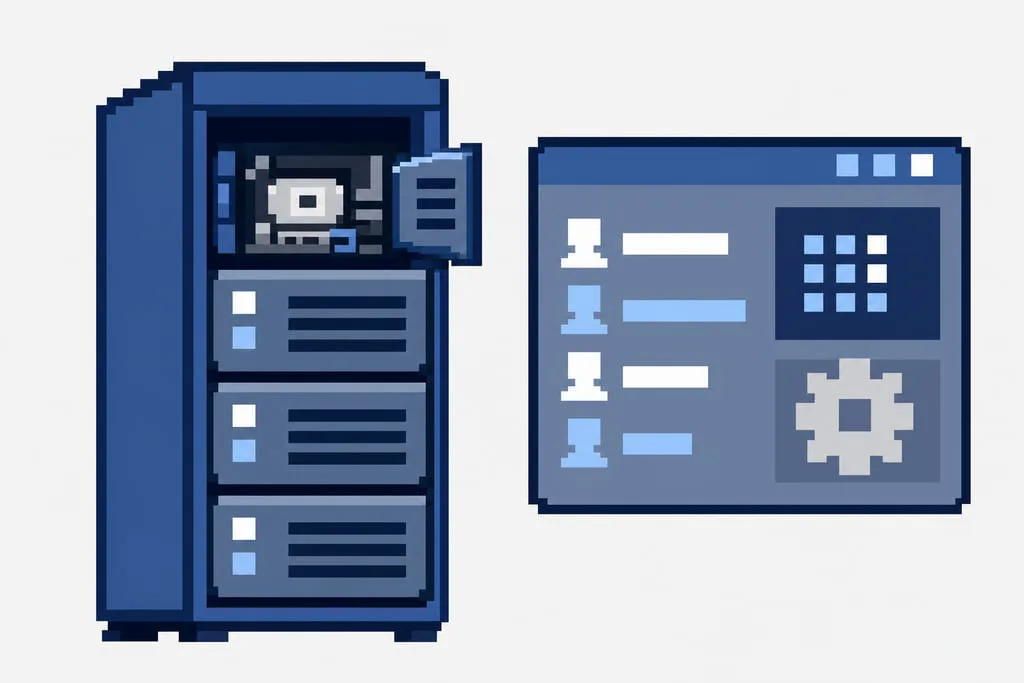
A system administrator keeps servers and the operating systems on them running, which means installing patches, configuring new machines, managing user accounts, and watching for failures before they take down a service. The job is hands-on with hardware and software both, not just one or the other. On any given day you might rebuild a failed drive array in the morning and troubleshoot a login issue for a remote office in the afternoon.
This role sits next to a few other IT titles, and the lines matter when you are deciding what job to apply for. IT support handles the person in front of them, fixing a laptop or resetting a password. A network administrator keeps the routers, switches, and firewalls online. A network engineer designs and builds new network architecture, including cloud networking and major migrations, which is a step up in scope from day-to-day maintenance.
| Role | Main focus | Typical salary range |
|---|---|---|
| IT Support | Help desk, hardware and account fixes | $28k - $38k/yr |
| System Administrator | Servers, OS, infrastructure uptime | $79k - $209k/yr |
| Network Administrator | Routers, switches, firewalls, connectivity | $91k - $146k/yr |
| Network Engineer | Network design, automation, migrations | $164k - $201k/yr |
Those ranges come from current job postings, and a structured course for system administrators can help you figure out which rung of that ladder you are qualified for right now.
Learn the Technical Skills Employers Expect
Before you apply anywhere, you need a working grip on the systems you'd be managing. That starts with operating systems: Windows Server for most corporate shops, and Linux administration basics since so much backend infrastructure runs on it. You don't need to master both, but you need to be able to navigate a command line, manage user accounts, and troubleshoot boot failures on at least one.
Networking fundamentals come next, and this is where a lot of self-taught candidates fall short. You need to understand LAN/WAN setups, basic firewall configuration, and how routing actually moves traffic between networks, not just what the terms mean on a flashcard. Cloud and virtualization knowledge matters just as much now. Most sysadmin postings today expect some Microsoft Azure or Microsoft 365 administration experience, including managing identity through Entra ID.
Scripting rounds out the list. PowerShell is the standard for Windows environments, and Python shows up constantly for automation tasks like bulk account changes or log parsing. Here's what to have working knowledge of before you start applying:
- Windows Server administration and Linux command line basics
- Firewall rules, LAN/WAN setup, and routing concepts
- Microsoft 365 and Azure administration, including Entra ID
- PowerShell or Python for repetitive tasks
Get Certifications That Open Doors
Certifications prove you know the basics before an employer has to take your word for it. CompTIA A+ is the standard entry point, and Network+ backs it up with networking fundamentals that come up in nearly every sysadmin interview. Neither certification takes more than a few months of focused study, and both are recognized across the industry regardless of what shop you're targeting.
Once you're past entry level, certifications tied to your target employer's stack matter more than general ones. Microsoft certifications around Azure administration and Microsoft 365 carry weight if you're applying to shops running cloud infrastructure. If the job posting mentions a Linux-heavy environment, RHCSA tells a hiring manager you can administer Red Hat systems without hand-holding.
No certification replaces hands-on practice, and hiring managers know the difference between someone who passed a test and someone who's rebuilt a server after a failed update. Treat certifications as a way to get your resume past the first filter, not as the finish line. A reasonable certification path looks like this:
- CompTIA A+ and Network+ for entry-level roles
- Microsoft Azure or Microsoft 365 certifications for cloud-focused jobs
- RHCSA if you're targeting Linux-heavy environments
- Lab practice or a home server to back up every certification you earn
Start in an Entry-Level Role to Build Experience
Help desk and desktop support is where almost every sysadmin career actually begins. You're resolving hardware, software, and account issues for end users, and that work teaches you the exact troubleshooting instincts a sysadmin needs later, just at a smaller scale. Fixing fifty password resets a week builds the pattern recognition you'll later use diagnosing server issues.
On the job, learn the tools that show up in real postings: ConnectWise Manage for ticketing and client management, and NinjaOne RMM for remote monitoring and patching. Both are common in managed service providers and give you direct exposure to the kind of infrastructure work a sysadmin does daily. Most people spend one to three years in help desk or desktop support before moving into a full sysadmin title, and that timeline shortens if you pick up scripting and server exposure along the way.
A realistic progression looks like this:
- Help desk or desktop support, building ticket volume and user-facing troubleshooting
- Tier 2 support or junior sysadmin, handling escalations and server basics
- Full system administrator, owning servers, patching, and infrastructure uptime
Find and Apply to the Right Sysadmin Openings
Generic job boards bury sysadmin roles under a flood of software developer listings, since most boards are built around engineering hires, not infrastructure. That means more scrolling and more applications to jobs that don't match your skill set. A board built specifically for IT and infrastructure roles saves that wasted time.
When you find a posting worth applying to, check the work arrangement (remote, hybrid, or onsite), the salary range, and the specific tools listed, since a posting asking for Azure and Entra ID is a different job than one asking for on-prem Active Directory. Sysadmin Jobs lets you filter directly by role, including System Administrator, IT Support, and Network Administrator, so you're not sorting through QA or developer postings to find the ones that fit.
Apply to fewer roles that actually match your skills instead of mass-applying with an AI auto-apply tool, since a tailored application for a role you're qualified for beats twenty generic ones. Before you apply, check a posting for these:
- Work arrangement: remote, hybrid, or onsite, and any time zone requirements
- Salary range and whether it matches your experience level
- Required tools and whether you've actually used them, not just heard of them
- Benefits and perks listed, which vary widely between postings
Degree, Certs, or a Home Lab: Pick Your Investment
A four-year degree is not a requirement for most sysadmin postings. Hiring managers filter for proof you can handle production systems, not a diploma, and that proof comes from certifications, a home lab, or a job history of actual troubleshooting. If you already have a degree in an unrelated field, that time is not wasted, but it will not substitute for the hands-on skills covered earlier.
A home lab or volunteer IT work fills the gap when you have no professional experience yet. Setting up a virtual server, breaking it on purpose, and fixing it teaches the same instincts as a help desk ticket queue, and you can describe it in an interview the same way you'd describe paid work. Volunteering to manage IT for a nonprofit, a church, or a small business gives you a reference and a real incident to talk about, which a resume with no practical examples cannot offer.
Certifications matter most when you pair them with a story. CompTIA A+ on a resume gets you past an applicant tracking system, but the interview is won by explaining the time you rebuilt a RAID array after a drive failure or untangled a DNS issue at 2am. A candidate with two certifications and three solid troubleshooting stories will beat a candidate with five certifications and nothing to say when asked "tell me about a time."
| Path | Time cost | Best fit |
|---|---|---|
| Four-year degree | 4 years, highest cost | Career changers wanting management track later |
| Certs plus home lab | 3-6 months per cert | Career starters with no IT job yet |
| Help desk plus certs | 1-3 years on the job | Anyone already working support who wants to move up |
Decide When to Stop Studying and Start Applying
Once you have one certification, a working grip on operating systems and networking, and some ticket or lab experience to describe, stop reading and start applying. Set a two-week limit: in that window, send applications only to postings that match the job you qualify for today, not the sysadmin title you want in three years. A help desk candidate applying to senior infrastructure roles wastes everyone's time, including their own. Search a board built for IT and infrastructure roles, like Sysadmin Jobs, instead of a general listing site, so you spend that two weeks reading postings that fit your skill set instead of scrolling past developer jobs. Pick five postings that match, tailor each one, and send them.
Sysadmin Career Questions
Can I become a system administrator without any IT support experience first?
It is possible, but rare, and it usually only happens through a home lab, military IT work, or volunteer system administration that gives you a real incident to point to. Most hiring managers still want proof you have handled live users and production access before. Skipping help desk entirely means your certifications and lab work have to do all the talking.
Is it better to specialize in Windows or Linux as a new sysadmin?
Pick based on the job postings in your area, not a general preference. Windows Server shows up more often in corporate help desk and small business environments, while Linux dominates backend infrastructure and cloud-heavy shops. Browse a handful of sysadmin postings on a board like Sysadmin Jobs and count which operating system comes up more, then specialize there first.
What if I keep getting rejected for sysadmin roles even with certifications?
Certifications get your resume past the filter, but rejections at the interview stage usually mean you are applying above your current experience level or you cannot tell a clear troubleshooting story. Go back through your lab work or help desk tickets and pick three specific incidents you fixed. Also check that you are applying to postings matching your actual tier, not a senior title you are not ready for yet.
Do I need to move to a new company to go from help desk to sysadmin, or can I get promoted internally?
Internal promotion happens often, especially at managed service providers and small IT teams where a help desk tech can pick up server tickets and prove themselves over time. It depends on whether your current employer has a sysadmin opening and whether you have asked for the chance to shadow one. If there is no path internally after a year or two, that is when it makes sense to apply externally.