How to Hire Network Engineers Through IT Job Boards
Learn how to hire network engineers fast using targeted IT job boards. Post free, reach verified candidates, and skip the LinkedIn noise.
By David Nix
Published

The fastest way to hire a network engineer is to post the role on a niche IT infrastructure job board instead of a general job site. Generalist platforms mix network engineer openings in with thousands of developer and marketing postings, so the right candidates scroll right past your listing. A board built only for sysadmin, network, and infrastructure roles puts your posting in front of people who are already searching for that exact title.
On a big platform, a network engineer opening often sits next to hundreds of software developer roles that use similar words like "engineer" or "cloud." Candidates get worn out filtering through listings that have nothing to do with routers, firewalls, or network builds. A focused board skips that problem because every listing on it is already IT or infrastructure work, so the people browsing are the people you want applying.
Table of Contents
Why Generalist Job Boards Slow Down Network Hires
A network engineer designs, builds, automates, and migrates networks, including cloud networking work like VPC design, hybrid connectivity, and SD-WAN rollouts. That is a different job than a developer writing application code, but on a broad job board the two titles often blend together in the same search results.
The applicant pool gets diluted fast when network roles sit inside a feed built mostly for software jobs. Hiring managers end up screening resumes from backend developers, DevOps candidates, and bootcamp grads who searched "engineer" and applied anyway.
| Metric | Generalist board | Niche IT board |
|---|---|---|
| Applicants per posting | 150-300 | 20-40 |
| Applicants with real network experience | 10-15% | 60-80% |
| Hours spent screening before first interview | 8-12 | 2-4 |
Pay for network engineers also spreads wide, from around $79k for entry-level or hybrid admin-engineer roles up past $260k for senior architects handling large-scale cloud migrations. A clear job post should state which end of that range the role falls in, since cloud networking scope and seniority are the two biggest factors driving the number. A case study on global network engineer hiring breaks down how scope and location affect comp ranges in more detail.
Write a Job Post That Attracts the Right Candidates
A strong network engineer posting names the exact tools the job touches, not just "networking experience required." List cloud networking, LAN/WAN management, firewall configuration, routing, Microsoft Azure, and virtualization by name so candidates can self-check their fit before they apply. Vague postings pull in resumes from people who read "network" and guessed.
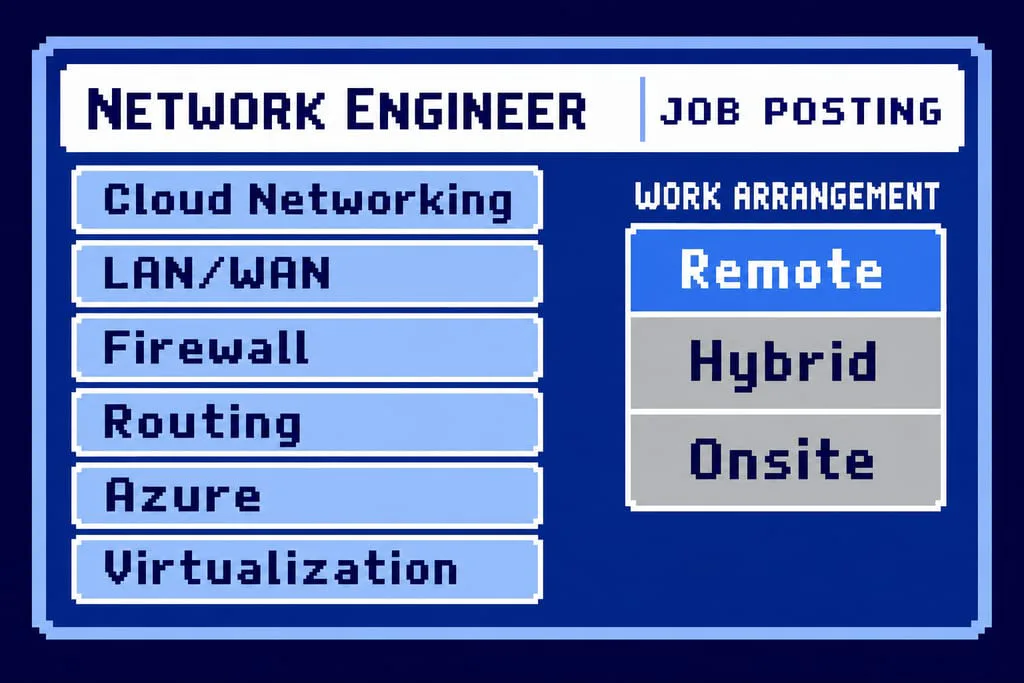
State the work arrangement up front: remote, hybrid, or onsite. Candidates filter by this first, so burying it in paragraph three just means more questions during screening calls you didn't need to take.
A real salary range does more work than any other line in the post. Posting a specific range instead of "competitive salary" cuts mismatched applications fast, because engineers targeting $235k-$260k architect roles won't waste your time applying to a $79k support-heavy opening, and vice versa. List benefits and perks counts too, since candidates compare offers in minutes, not days.
- Named tools and platforms the role actually uses
- Remote, hybrid, or onsite, stated plainly
- A real salary range tied to seniority level
- Benefit and perk counts, for example "9 benefits + 3 perks"
- Employment type and required years of experience
Post on a Board Built for Infrastructure Roles
A board built only for sysadmin and infrastructure work separates network engineer listings from developer roles from the start, so the people browsing are already looking for your title. Sysadmin Jobs lists direct postings from 2,475 companies hiring now, with job details verified across the web instead of scraped and left stale. Employers post directly and for free, which means no recruiter fee eating into the hiring budget before the first interview even happens.
Fresh volume matters too. The site adds thousands of new IT and infrastructure listings every month, so a single post doesn't sink to page ten within a day the way it can on a crowded generalist feed. Candidates browsing specifically under "Network Engineer" find the post without wading through QA, help desk, or developer openings first.
- Listings separated by role: Network Engineer, Network Administrator, System Administrator, IT Support, QA Engineer
- Free direct posting, no third-party recruiter markup
- Details verified across the web for candidate trust
- Thousands of fresh listings added monthly, so posts stay visible
Reach Passive Candidates Who Aren't Job Hunting Yet
Most experienced network engineers aren't refreshing job boards daily, they're already employed and busy. A weekly newsletter shortlist reaches them anyway, since opening one short email takes less effort than browsing listings, and a well-matched role in that inbox gets noticed. This is how you reach someone who isn't actively looking but would move for the right opening.
Direct outreach works differently here too. Instead of cold LinkedIn InMail that lands in a pile of ignored messages, a recruiter can request a connection, and the candidate decides whether to respond, with no public signal to their current employer. That privacy protection is what gets a reply instead of silence.
- Weekly shortlist email versus daily job-board scrolling
- Connection request with candidate opt-in versus unsolicited InMail
- No "open to work" badge versus a visible public job-search flag
- Zero recruiter spam in the inbox versus mass messaging campaigns
Filter Applicants by Skills Instead of Guesswork
Screening starts with matching listed skills against the job's actual requirements, not a resume's job titles. Check for Entra ID, Microsoft 365 administration, distributed systems, and cloud infrastructure experience against what the role truly needs, since a candidate strong in one area can be weak in another that matters more for this opening.
Confirm the candidate's background fits a Network Engineer, someone who designs, builds, automates, or migrates networks, rather than a Network Administrator, who maintains routers, switches, and firewalls day to day. Those are different jobs even though both show up under "network" searches. For remote postings, check location and time zone requirements closely before moving someone to an interview, since a mismatch there kills offers later in the process.
- Match listed skills to the role's real day-to-day work
- Confirm design/build/migrate experience, not just maintenance work
- Check time zone overlap for remote roles before scheduling calls
- Compare the candidate's expected pay against the posted range to avoid wasted interviews
Pick a Wide Net or a Small, Matched Pool
Hiring a network engineer comes down to a choice between two models: cast wide and sort later, or post somewhere narrow and skip the sorting. LinkedIn's Easy Apply button is built for volume, one click sends a resume with no real filter for whether the person has touched BGP or just put "network" in their headline. That model rewards whoever applies to the most jobs, not whoever fits the role best.
A narrow board flips that. Fewer people see the post, but the ones who do already searched under "Network Engineer" on purpose. AI auto-apply tools make the wide-net problem worse, since they let one candidate blast hundreds of applications in minutes with no read of the job at all. A focused board never sees that traffic, because the tools target the big generalist feeds where volume pays off.
| Hiring approach | Who shows up in your inbox | Best fit for |
|---|---|---|
| LinkedIn Easy Apply | High volume, mixed titles, AI auto-apply noise | Entry-level roles needing a big funnel |
| Cold outreach / InMail | Low response, public "open to work" risk | Passive senior hires willing to risk visibility |
| Niche infrastructure board | Smaller pool, 0 recruiter spam, 175 active remote roles | Specialist and senior network hires |
That smaller, curated market is the trade-off: fewer resumes land in the inbox, but almost all of them are worth a screening call. For a senior cloud networking hire where one bad interview wastes a week, that trade is worth it. For a high-volume entry-level push, a wider feed still has its place, even with the extra sorting it demands.
Put the Opening in Front of Candidates Today
The next step is simple: write the post, name the tools, state the range, and publish it somewhere network engineers actually browse. Sysadmin Jobs lets you post directly and for free, with the listing filed straight under "Network Engineer" instead of buried behind developer roles. There's no recruiter fee to approve, no contract to sign, and nothing to lose by testing it against whatever board you're using now. If the role sits open another week on a feed built for software jobs, that's a week of candidates who never saw it because they weren't looking there. Post it where the search is already narrowed to your title, and let the applicants who show up be the ones worth calling.
Network Engineer Hiring Questions
How long does it take to get applicants after posting a network engineer job?
Most employers see applicants within a few days of posting, since network engineer searches on a focused board happen daily rather than weekly. The exact pace depends on the role's seniority and how narrow the required skills are. Postings with a named salary range and clear tools tend to pull qualified applicants faster than vague ones, since candidates can self-screen before clicking apply.
Can I post more than one network engineer opening at the same time for free?
Yes, employers can post multiple openings on Sysadmin Jobs, and each one goes up free of charge. There's no recruiter fee or per-listing cost that limits how many roles you list at once. Filing each opening separately under the right title also keeps a bulk hiring push from looking like one confusing combined post.
What if I need a network engineer with a very specific cloud certification?
Name the certification directly in the job post rather than folding it into a general "cloud experience" line. Candidates browsing under "Network Engineer" already expect technical specifics, so listing something like an Azure networking certification up front filters out applicants who don't hold it before they ever reach your inbox. A vague line like "cloud skills preferred" invites applicants who don't actually have the credential you need.
How do I avoid getting applicants who are actually network administrators instead of engineers?
Write the job title and the day-to-day duties to match engineering work, not maintenance work. State that the role involves designing, building, or migrating networks rather than keeping routers and firewalls running, since those two jobs attract different applicants even under the same search term. A posting that names specific build or migration projects, instead of general upkeep tasks, pulls in the right title from the start.